
Varicoceles/Varicocelectomy
Understanding Varicoceles
Varicoceles often develop during adolescence and are a common, progressive cause of male infertility, abnormal semen analysis results, and sometimes low testosterone.

When, where, and why do varicoceles develop?
Varicoceles most often develop during adolescence as the testes grow and blood flow increases; if vein valves don’t work well, blood can pool in the scrotum. They’re most commonly left-sided (50%), bilateral (45%), and rarely right-only (5%). The exact cause isn’t fully known, but genetics may play a role. A new large varicocele after adolescence should be evaluated to rule out rare abdominal compression.
Why can a varicocele be a problem?
Varicoceles can be progressive and may contribute to testicular damage, infertility, low testosterone, pain/heaviness, and sometimes cosmetic concerns. They’re present in about 15% of men overall but are more common in infertility — around 40% in primary infertility and 80% in secondary infertility. Repairing them earlier (especially in adolescence) may better protect testicular growth; later repair may still improve sperm and testosterone, though the testicle typically won’t regain size. Testosterone often rises after surgery (on average about 100 ng/dL).
How do varicoceles cause damage?
The main mechanisms are increased testicular temperature (warm blood pooling around the testes) and possible backflow of waste products, especially on the left side where veins drain toward the kidney. Varicoceles can affect most semen analysis parameters — concentration, motility, forward progression, and morphology — and may also impact sperm function beyond routine testing.
Diagnosis and Treatment
A varicocele is a common, treatable cause of male infertility and abnormal semen analysis results, caused by dilated veins in the scrotum that can impair sperm production and quality. Many men notice a varicocele as a “bag of worms” feeling, scrotal heaviness, discomfort, or even a smaller testicle on the affected side — symptoms that should prompt a male fertility evaluation. Diagnosis is made through a focused physical exam and can be confirmed with duplex scrotal ultrasound, the best noninvasive test to identify varicoceles and assess abnormal blood flow. When treatment is indicated, the gold-standard repair is a microscopic sub-inguinal varicocelectomy with ultrasound guidance, performed by a fertility-focused urologist to maximize improvement while protecting testicular blood flow. Maze specializes in sophisticated diagnosis and evidence-based varicocele treatment planning to support improved sperm health and fertility outcomes.

How men discover a varicocele (self-diagnosis)
Many boys and men recognize a varicocele because they can feel a mass of dilated veins in the scrotum that resembles a sack of worms or spaghetti, often seen with larger varicoceles. Some also notice discomfort on that side or a smaller testicle. Interestingly, the scrotum may look larger on the affected side due to enlarged veins, even while the testicle itself may feel smaller.
How a physician diagnoses a varicocele (exam findings)
Varicoceles are often easiest to feel when a man is standing, where the veins may again feel like a “bag of spaghetti.” They may lessen or disappear when lying down. During the exam, a physician may ask the patient to bear down (similar to a bowel movement), which can cause a backward “impulse” of blood into the scrotum that supports the diagnosis.
Confirming varicoceles with testing
- Doppler stethoscope: Amplifies blood-flow sounds. At rest, you typically hear arterial pulsation; with bearing down, increased backward venous flow can be heard as a rushing sound.
- Duplex ultrasound (best noninvasive test):
- Part 1: Measures vein diameter and evaluates the testicle; additional abnormalities may be detected that weren’t suspected on physical exam.
- Part 2: Measures and confirms abnormal blood flow during bearing down, which can be visualized in color and heard.
Treatment: Varicocelectomy
Gold standard: Microscopic sub-inguinal varicocelectomy with ultrasound guidance
Studies consistently support this as the best approach, and it should be performed by a urologist specializing in fertility and microsurgery.
What “sub-inguinal” means (incision location)
A small incision is made about one inch above the top of the penis and slightly to the side (two incisions if both sides are repaired). Scars are typically hidden by pubic hair. This location avoids cutting abdominal muscle, which usually means less pain and faster recovery.
What “microscopic” means (precision + tissue protection)
An operating microscope allows the surgeon to clearly identify and tie off the problem veins while preserving arteries (blood supply) and lymphatics (fluid drainage) — key to improving outcomes and reducing complications like hydrocele.
What “ultrasound guidance” adds (artery identification)
A small ultrasound probe helps locate arteries that must be preserved. Protecting blood flow to the testes is associated with better post-operative improvement.
What the procedure is like + recovery
Patients are typically sedated (asleep but not intubated) with local anesthetic in the area. The spermatic cord is brought out through the incision, layers are carefully separated, arteries are identified and protected, and veins are tied off. Most men have mild discomfort with some swelling/bruising for several days and return to work in 2–3 days; pain medication needs are often minimal.
Other approaches (and why they’re less preferred)
Inguinal varicocelectomy (hernia-type incision)
Often done by general urologists. The incision is higher and longer, abdominal muscle is cut (more pain, longer recovery), and without a microscope, it’s harder to preserve arteries/lymphatics or fully address all veins, leading to higher failure and higher hydrocele risk.
Retroperitoneal varicocelectomy
Higher incision with more visible scar and abdominal muscle cutting. Arteries can’t be preserved. Higher failure rates and hydrocele risk.
Laparoscopic varicocelectomy
Requires general anesthesia, bladder catheter, and multiple abdominal incisions. Higher risks and generally higher recurrence/hydrocele rates compared with microscopic sub-inguinal repair.
Percutaneous embolization (interventional radiology)
A catheter-based procedure that blocks the vein with a coil/substance. It can be useful in special cases (like significant scar tissue from prior surgery), but can have a higher failure rate because not all contributing veins are reliably blocked.
Varicocelectomy: Success Rates & When You’ll See Results

Varicocelectomy can be a highly effective treatment for male infertility when a varicocele is contributing to abnormal semen analysis results. Studies show that about 60% of couples achieve pregnancy within one year after varicocelectomy and about 72% within two years, compared with about 16% without surgery over the same time period. Success is also measured by semen improvement: roughly 65% of men see a significant improvement within 12 months, commonly defined as a doubling of total motile count (TMC). Men with larger varicoceles often see greater gains, and repair of both sides is commonly recommended when varicoceles are present bilaterally. Because sperm development takes time, improvements typically begin after several months and can continue for up to two years.
Pregnancy success rates after varicocelectomy
- ~60% achieve pregnancy within 1 year
- ~72% achieve pregnancy within 2 years
- Compared to ~16% without varicocelectomy over the same period
Semen analysis improvement (TMC-focused)
- ~65% show significant improvement within 12 months
- “Significant” is often defined as doubling the total motile count (TMC)
- Larger varicoceles tend to improve more; one study reported ~69% achieving a threefold increase in TMC
One side vs. both sides (bilateral varicoceles)
When a large varicocele exists on one side and a smaller one on the other, repair of both is generally recommended. In one study, men who repaired both sides saw about a 104% increase in TMC versus about 45% when only the left side was repaired.
Older men can still benefit
Data in men over 45 showed meaningful postoperative improvements in concentration, motility, and morphology, suggesting benefit even with long-standing varicoceles.
When you’ll see results (timeline)
Because sperm take about 78 days to develop, it usually takes at least 4 months to see meaningful changes on semen testing. Improvements may continue for up to 2 years; if there’s no improvement by 6 months, other options should be considered in parallel. Varicocelectomy does not harm sperm, so couples can keep trying during recovery and while waiting for improvement.
About Dr. Werner and Maze
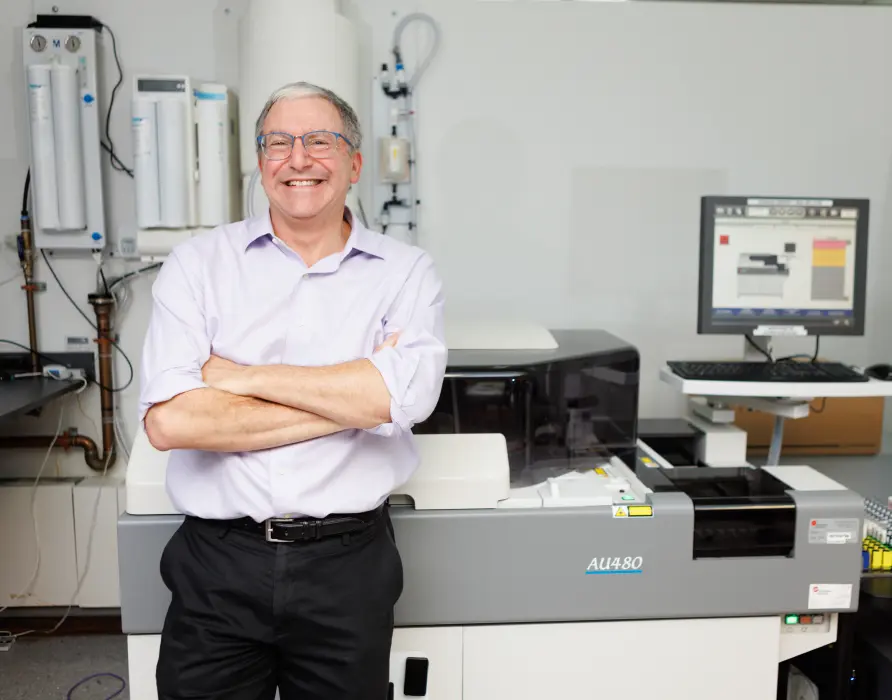
About Dr. Werner
With over 25 years in clinical practice, Dr. Michael Werner is a board-certified urologist specializing in sexual and reproductive medicine. His work is defined by thoughtful care, advanced treatment strategies, and a long-standing commitment to helping patients achieve better health and quality of life.
About Maze
Maze Sexual & Reproductive Health is a specialized medical practice dedicated to men’s health, women’s health, sexual medicine, and fertility care. Our approach emphasizes personalized care, clinical excellence, and innovative solutions that help patients feel informed, supported, and empowered.



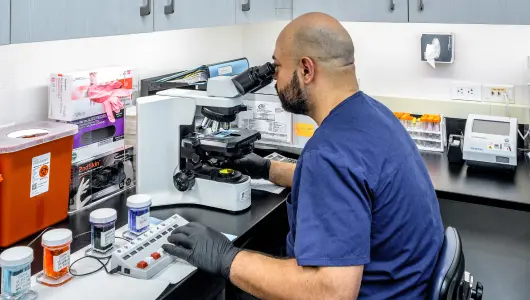





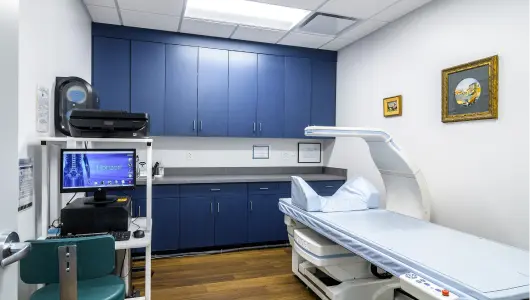



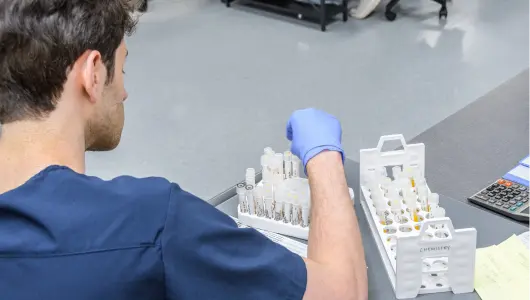
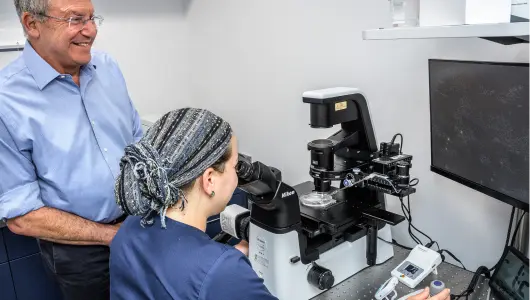
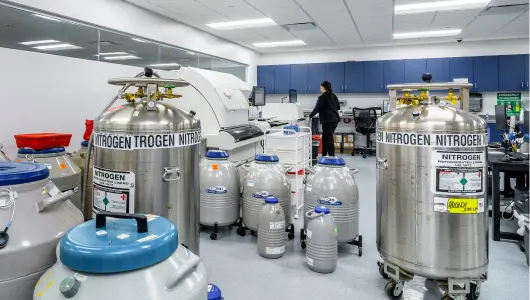


Maze facility
Maze’s modern facilities in Westchester, NY, and New York City are designed to provide expert care in a comfortable, private setting. Our on-site diagnostics, advanced therapies, and coordinated care allow patients to receive comprehensive services in one location.
Areas served
Serving Westchester County, New York City, Connecticut, and New Jersey, Maze supports patients locally and from out of state. Many seek our care for specialized expertise, with flexible options that include both in-person appointments and telemedicine consultations.

Patient Stories
Free consultation
I originally gave their NYC offices 1 star but after I posted that review, Dr. Werner called me, apologized and then spent almost an hour on the phone with me finding out in detail what my issues were with the clinic and my experience. At the end of our call he asked me to come in for a free consultation where
a) he showed me all the improvements they’d made; and
b) he discussed all the options I had.
Again, he promised to follow up in a month…and he did. So while I wish the entire experience had been excellent, his willingness to address the issues makes me willing to upgrade my review to 3 stars.
S.L, NY, Age 48
Well Organized
Everything was well organized, result was ready on time…and I think that the online service also helped save time.
K.A, CT, Age 43
This Is The Best Place To Go!
This is the best place to go! The staff is very nice. The price is also very affordable. Five stars!
K.Z, NY, Age 32
My experience with Dr. Werner and the entire staff was EXCELLENT!!
Everyone was very knowledgeable without making you feel intimidated. They took the time to explain everything and made sure that what we discussed was understood, they made sure I was comfortable with the testing, procedures and the treatment we decided on. I say we because they don’t force any one option, they make sure you are informed and educated about all options to best help you. The office staff are always friendly and helpful. Maze laboratories definitely makes an awkward, stressful and overwhelming situation much easier to talk about and understand.